



 0
0
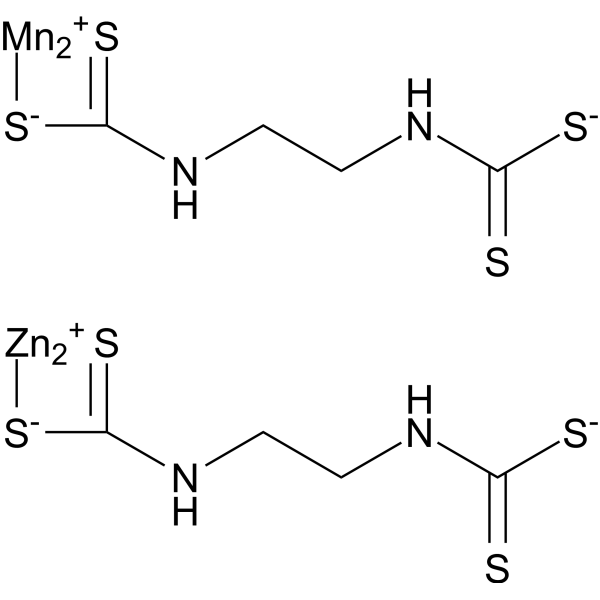
Specifications:
| Application | cell Signalling | ||
| Storage Temperature | -20°C | ||
| Product Type | Antifungals | ||
| Product Brand | MedChem Express | ||
| Product Grade | Molecular Biology | Formula | C₈H₁₂Mn₂N₄S₈Zn₂²⁻ |
Mancozeb is a widely used dithiocarbamate fungicide with broad-spectrum activity against fungal diseases affecting cereals, vegetables, fruits, and ornamental plants. In research settings, Mancozeb is extensively studied for its toxicological, metabolic, and molecular effects, particularly in the context of oxidative stress, hepatotoxicity, reproductive toxicity, and apoptosis.
Experimental studies have demonstrated that Mancozeb induces liver injury by activating the Keap1/Nrf2 signaling pathway, alters cellular metabolism through modulation of lactate dehydrogenase (LDH) and cytochrome c, and triggers cell death and apoptosis in both hepatic and ovarian cells. These properties make Mancozeb a valuable reference compound for toxicology, environmental health, and mechanistic cell biology research.
Chemical & Biological Properties
- Chemical Class: Dithiocarbamate fungicide
-
Target Pathways:
- Keap1/Nrf2 signaling pathway
- Oxidative stress response
- Mitochondrial apoptosis pathways
-
Mechanism of Action:
- Induces oxidative stress
- Alters cellular metabolism
- Promotes mitochondrial dysfunction and apoptosis
In Vitro Research Findings (Literature-reported)
In HepG2 human hepatocellular carcinoma cells, Mancozeb exhibits pronounced cytotoxicity:
- Concentration range: 0.1–500 ppm
- Exposure time: 24–48 hours
-
Observed effects:
- Significant reduction in cell viability at all tested concentrations
-
50% reduction in viability at 24 hours
- Near-total cell death after 48 hours at 100 ppm
- Reduced levels of LDH and cytochrome c as confirmed by Western blot analysis
These findings support the use of Mancozeb as a model compound for studying hepatotoxicity and metabolic disruption.
In Vivo Research Findings (Literature-reported)
Animal studies further demonstrate Mancozeb’s systemic toxicity:
Liver Toxicity Study
- Model: Female Kunming mice (6 weeks old)
- Dosage: 0–300 mg/kg (oral administration, 30 days)
-
Key outcomes:
- Reduced body weight in a dose-dependent manner
- Significant reduction in liver organ index at ≥250 mg/kg
- Decreased CAT, SOD, and ROS levels
- Upregulation of Keap1 and Nrf2 signaling proteins
Reproductive Toxicity Study
- Dosage: 100 mg/kg (oral gavage, 30 days)
-
Outcome:
- Ovarian injury and apoptosis
These models highlight Mancozeb’s relevance in environmental toxicology and reproductive health research.
Applications
- Toxicology and environmental health studies
- Oxidative stress and antioxidant pathway research
- Hepatotoxicity and metabolic disorder research
- Reproductive toxicity and apoptosis studies
- Mitochondrial dysfunction investigations
- Pesticide exposure and safety assessment models
Related Research Tools
Mancozeb is frequently used alongside antibodies and assays targeting:
- Nrf2 / Keap1 pathway proteins
- Cytochrome c and LDH
- Apoptosis markers (e.g., Cleaved PARP, DR5)
- Cell viability and oxidative stress assays
Packaging & Ordering Information
| Pack Size | Product Code |
|---|---|
| 100 mg | HY-B0854-100mg |
| 500 mg | HY-B0854-500mg |
| 1 g | HY-B0854-1g |
Storage & Stability
| Condition | Stability |
|---|---|
| Powder at –20 °C | 3 years |
| Powder at 4 °C | 2 years |
| In solvent at –80 °C | 2 years |
| In solvent at –20 °C | 1 year |
MCE Mancozeb 85.50% is a well-characterized research-grade compound widely employed in toxicology, oxidative stress, and environmental exposure studies. Its documented effects on hepatic metabolism, mitochondrial function, Keap1/Nrf2 signaling, and reproductive toxicity make it a valuable reference material for mechanistic investigations into pesticide-induced cellular damage. Supplied with multiple pack size options and defined storage stability, Mancozeb supports reproducible and high-quality research across in vitro and in vivo experimental models.
- Pack Size: 1g 100 mg 500 mg