



 0
0
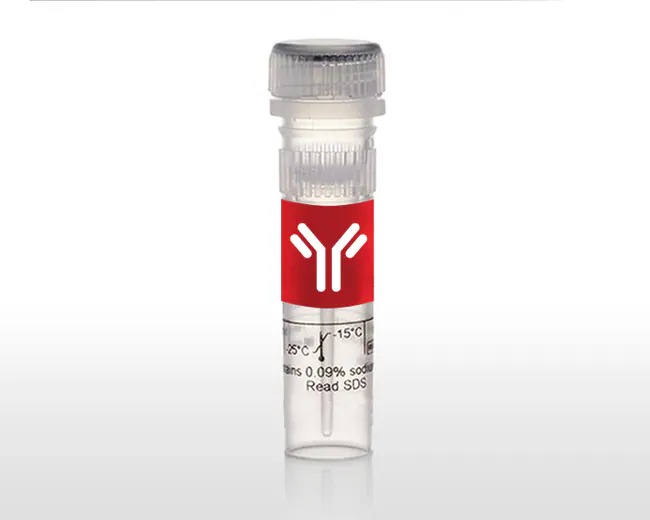
Invitrogen™ Beta III Tubulin Recombinant Rabbit Monoclonal Antibody (Clone SP06-00), 100 µL
Catalog No :
CAS Number :
Brand :
In Stock
High-Specificity Neuronal Marker Antibody for Research Applications
Specifications:
| Application | Western Blot, immunocytochemistry, Flow Cytometry, Immunohistochemistry | ||
| Storage Temperature | 2-8°C | ||
| Product Type | Primary Antibodies | Forms | Liquid |
| Product Brand | Thermo Fisher Scientific™, Invitrogen | ||
| Product Grade | Molecular Biology | ||
The Invitrogen™ Beta III Tubulin Recombinant Rabbit Monoclonal Antibody (Clone SP06-00) is a highly specific antibody designed for the detection of βIII-tubulin (TUBB3), a well-established marker of neuronal differentiation and neuronal origin cells. Produced using recombinant technology in HEK293 expression systems, this antibody delivers enhanced specificity, sensitivity, and lot-to-lot consistency.
βIII-tubulin is widely used in neuroscience and oncology research as a marker for neuronal cells and tumors of neuronal origin, making this antibody a valuable tool for cell biology, neurobiology, and disease research.
Key Features
-
Recombinant Monoclonal Antibody (Rabbit IgG)
Ensures high specificity, reproducibility, and consistency across batches. -
Highly Sensitive Detection
Suitable for detecting low-abundance neuronal markers. -
Unconjugated Format
Compatible with a wide range of labeled secondary antibodies. -
Broad Application Compatibility
Validated for WB, IHC, ICC/IF, and flow cytometry. -
High Affinity Purification (Protein A)
Provides strong signal with low background. -
Animal-Origin-Free Production
Recombinant expression enhances reliability and ethical sourcing.
Applications & Recommended Dilutions
| Application | Recommended Dilution |
|---|---|
| Western Blot (WB) | 1:20,000 |
| Immunohistochemistry (Paraffin) (IHC-P) | 1:50 – 1:200 |
| Immunohistochemistry (Frozen) (IHC-F) | 1:100 |
| Immunocytochemistry / Immunofluorescence (ICC/IF) | 1:100 – 1:200 |
| Flow Cytometry | 1:100 |
Technical Specifications
| Parameter | Specification |
|---|---|
| Product Name | Beta III Tubulin Antibody |
| Clone | SP06-00 |
| Brand | Invitrogen™ |
| Catalog Number | MA5-32035 |
| Format | Liquid |
| Conjugate | Unconjugated |
| Host / Isotype | Rabbit / IgG |
| Antibody Type | Recombinant Monoclonal |
| Expression System | HEK293 cells |
| Immunogen | Synthetic peptide (aa 392–441 of human βIII-tubulin) |
| Concentration | 1 mg/mL |
| Amount | 100 µg |
| Purification | Protein A |
| Storage Buffer | TBS, pH 7.4 with 40% glycerol, 0.05% BSA |
| Preservative | 0.05% sodium azide |
| Storage Conditions | 4°C (short term), -20°C (long term) |
| Shipping Conditions | Ambient (domestic), wet ice (international) |
| RRID | AB_2809329 |
Species Reactivity
- Human
- Mouse
- Rat
Target Information
βIII-tubulin (TUBB3) is a microtubule protein predominantly expressed in neuronal cells and is one of the earliest markers of neuronal differentiation. It plays a key role in cytoskeletal organization and microtubule dynamics, and is widely used as a marker in:
- Neurogenesis studies
- Neuronal cell identification
- Brain and nervous system research
- Tumors of neuronal origin
It has also been detected in Sertoli cells and certain embryonic tissues, expanding its relevance in developmental biology.
Application Insight
This antibody has been successfully used in immunocytochemistry-immunofluorescence studies to investigate astrocyte remodeling and neuroinflammatory responses, demonstrating its utility in advanced neuroscience research.
Compatible Secondary Antibodies
For detection, use anti-rabbit secondary antibodies such as:
- Alexa Fluor™ 488
- Alexa Fluor™ 594 / 647
- Alexa Fluor™ Plus series
- DyLight™ and FITC-conjugated antibodies
The Invitrogen™ Beta III Tubulin Recombinant Rabbit Monoclonal Antibody (SP06-00) offers a reliable and high-performance solution for the detection of neuronal markers. Its recombinant design, high specificity, and compatibility with multiple applications make it an essential tool for neuroscience, cell biology, and cancer research laboratories.