



 0
0
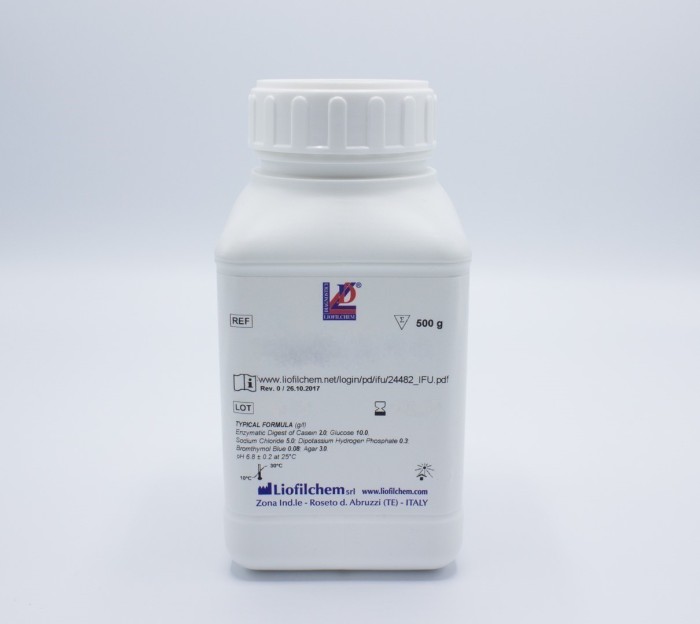
Liofilchem® Bile Aesculin Broth
Catalog No :
CAS Number :
Brand :
In Stock
Liquid Medium for Selective Isolation and Differentiation of Enterococci and Group D Streptococci
Specifications:
| Application | Microbiology | ||
| Storage Temperature | Ambient | ||
| Product Type | Culture Medium | Forms | Solid |
| Product Brand | Liofilchem | ||
| Product Grade | Microbiology grade | ||
Liofilchem® Bile Aesculin Broth is a selective enrichment and differential medium designed for the isolation and preliminary identification of Enterococci and Group D Streptococci (e.g., Streptococcus bovis group) from food, water, and environmental samples.
This medium is formulated to differentiate bacteria capable of hydrolyzing aesculin in the presence of bile salts. Positive organisms hydrolyze aesculin into aesculetin and glucose, with aesculetin reacting with ferric ions in the medium to produce a distinct dark brown to black coloration.
Although used for selective differentiation, this broth is not intended for clinical diagnostic use in humans.
Key Features
- Selective for Enterococci and Group D Streptococci: Inhibits Gram-negative and most Gram-positive bacteria through the combined action of oxgall (bile) and sodium azide.
- Differential by Color Reaction: Positive isolates produce a black precipitate through aesculin hydrolysis.
- Liquid format allows easy inoculation and observation of color change.
- Accurate presumptive identification for further confirmation testing.
- Applicable for food and environmental microbiology, especially in sanitation and water quality control.
- Stable, reproducible performance with consistent biochemical reactivity.
Principle of the Method
- Peptone and Tryptone: Provide nitrogen, peptides, and amino acids for bacterial growth.
- Yeast Extract: Supplies B-complex vitamins and additional nitrogenous growth factors.
- Oxgall (Bile): Acts as a selective agent; inhibits most Gram-positive organisms except Group D Streptococci and Enterococci.
- Esculin: A glucoside hydrolyzed by Enterococci and Group D Streptococci to produce aesculetin and dextrose.
- Ferric Ammonium Citrate: Reacts with aesculetin to form a dark brown/black complex, indicating a positive result.
- Sodium Azide: Inhibits Gram-negative bacteria, enhancing selectivity.
Typical Formula (per litre)
| Component | Concentration (g/L) |
|---|---|
| Peptone | 3.0 |
| Tryptone | 17.0 |
| Sodium Chloride | 5.0 |
| Yeast Extract | 5.0 |
| Oxgall | 10.0 |
| Esculin | 1.0 |
| Ferric Ammonium Citrate | 0.5 |
| Sodium Azide | 0.15 |
| Final pH at 25°C | 7.1 ± 0.2 |
Formula may be adjusted and/or supplemented as required to meet performance specifications.
Preparation
- Suspend 41.7 g of dehydrated medium in 1 L of distilled or deionized water.
- Mix thoroughly and heat gently until fully dissolved.
- Dispense into appropriate containers.
- Sterilize by autoclaving at 121°C for 15 minutes.
- Cool and store at room temperature until use.
Test Procedure
- Inoculate the broth with a loopful of the test sample or culture.
- Incubate at 35 ± 2°C for 18–48 hours.
- Observe for blackening of the medium.
Interpretation of Results
| Reaction | Result | Interpretation |
|---|---|---|
| Blackening of medium | Positive | Presence of Group D Streptococci or Enterococci (aesculin hydrolysis) |
| No color change (medium remains yellowish) | Negative | No aesculin hydrolysis; other organisms inhibited or absent |
Quality Control
| Test Strain | ATCC No. | Expected Reaction | Incubation Conditions |
|---|---|---|---|
| Enterococcus faecalis | 19433 | Good growth, blackening of medium (positive) | 18–24 h at 35 ± 2°C |
| Streptococcus pyogenes | 19615 | Inhibited | 24–48 h at 35 ± 2°C |
| Escherichia coli | 25922 | Inhibited | 24–48 h at 35 ± 2°C |
| Staphylococcus aureus | 25923 | Inhibited | 24–48 h at 35 ± 2°C |
Appearance of Dehydrated Medium: Free-flowing, homogeneous, greenish light beige
Appearance of Prepared Medium: Slightly greenish, dark amber
Storage and Stability
- Store dehydrated medium at 10–30°C in a dry, tightly sealed container.
- Store prepared tubes at 10–25°C, protected from light.
-
Shelf Life:
- Dehydrated medium: 4 years
- Medium in tubes: 2 years
- Do not use product if there are signs of contamination, deterioration, or expiration.
Warnings and Precautions
- For professional use only.
- Not for human or clinical diagnostic applications.
- Handle according to Good Laboratory Practice (GLP).
- Consult the Safety Data Sheet (SDS) for hazard information.
- Dispose of media and cultures in accordance with national biosafety and waste regulations.
Performance Characteristics
- Selectively isolates Enterococci and Group D Streptococci from complex microbial flora.
- Inhibits Gram-negative and most non–Group D Gram-positive organisms.
- Produces a clear, visible color reaction for easy interpretation.
- Validated using Enterococcus faecalis ATCC® 19433 as positive control.
Ordering Information
| Product Format | Packaging | Catalog Ref. | Shelf Life |
|---|---|---|---|
| Bile Aesculin Azide Broth (Dehydrated Medium) | 100 g | 620151 | 4 years |
| Bile Aesculin Azide Broth (Dehydrated Medium) | 500 g | 610151 | 4 years |
Liofilchem® Bile Aesculin Broth provides a reliable, selective liquid medium for the differentiation of Enterococci and Group D Streptococci through aesculin hydrolysis and bile tolerance. The distinctive black color change offers an easily interpretable visual result, making it ideal for use in food microbiology, water quality control, and environmental testing laboratories.
- Pack Size: 100g 500g