










 Contact us
  My Experiments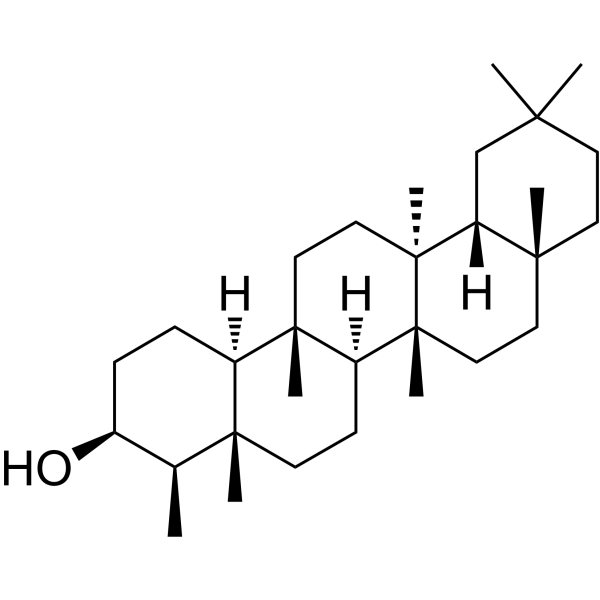
Epifriedelanol (3-epifriedelinol) is a naturally occurring triterpenoid compound isolated from plant sources such as the root bark of Ulmus davidiana. It has attracted significant interest in biochemical and pharmacological research due to its reported antitumor, anti-inflammatory, and anti-senescence properties.
This compound has demonstrated the ability to induce apoptosis in cancer cell lines, including DU145 prostate cancer cells, and may inhibit cellular senescence in human primary cells. Epifriedelanol is therefore widely used in studies investigating cell signaling pathways, apoptosis mechanisms, oxidative stress, and anticancer research.
MedChemExpress Epifriedelanol is supplied at high purity (≥99.69%), making it suitable for cell biology, molecular biology, and pharmacology research applications.
Key Features
- High purity research compound (≥99.69%)
- Natural triterpenoid bioactive molecule
- Demonstrated apoptosis-inducing activity in cancer cell lines
- Reported anti-inflammatory and anti-tumor properties
- Used in cellular senescence and oxidative stress research
- Suitable for in vitro and in vivo experimental studies
Chemical Information
| Parameter | Specification |
|---|---|
| Chemical Name | Epifriedelanol |
| Synonym | 3-Epifriedelinol |
| CAS Number | 16844-71-6 |
| Molecular Formula | C₃₀H₅₂O |
| Molecular Weight | 428.73 g/mol |
| Structure Classification | Terpenoids – Triterpenes |
| Appearance | White to off-white solid |
Biological Activity
Epifriedelanol exhibits several biological activities relevant to pharmacological research:
- Induction of apoptosis in DU145 prostate cancer cells
- Antitumor activity demonstrated in in vitro assays
- Anti-inflammatory effects through suppression of inflammatory markers
- Inhibition of cellular senescence in human dermal fibroblasts and endothelial cells
- Regulation of apoptosis-related proteins including p53, p21, BAX, NF-κB, and BCL2
Studies have also shown that epifriedelanol can suppress reactive oxygen species (ROS) production and reduce oxidative stress associated with drug-induced cellular aging.
In Vitro Research Findings
Experimental studies have reported:
- Cytotoxicity testing in cancer cell lines such as MCF7, NCI-H460, SF-268, TK-10, and UACC-62
- Apoptotic activity in DU145 prostate cancer cells with IC₅₀ values around 32–35 μM after 72 hours
- Downregulation of p53 and p21 proteins induced by adriamycin treatment
- Suppression of senescence-associated β-galactosidase activity in primary human cells
In Vivo Research Findings
Animal studies using Sprague-Dawley rats have demonstrated that Epifriedelanol:
- Reduces Bisphenol A (BPA)-induced gonadotoxicity
- Decreases oxidative stress markers
- Suppresses inflammatory mediators including NO, IL-6, and TNF-α
- Maintains physiological estradiol levels
- Shows favorable biosafety without detectable hematological toxicity
Solubility Information
| Solvent | Solubility |
|---|---|
| THF | 10 mg/mL (ultrasonic recommended) |
| Water | < 0.1 mg/mL (insoluble) |
| DMF | < 1 mg/mL |
| Ethanol | < 1 mg/mL |
| DMSO | < 1 mg/mL |
| Acetone | < 1 mg/mL |
Storage Conditions
- Store at 4 °C, protected from light
-
In solvent:
- −80 °C: stable for up to 6 months
- −20 °C: stable for up to 1 month
Available Pack Sizes
| Catalog Number | Quantity |
|---|---|
| HY-N1931-1MG | 1 mg |
| HY-N1931-5MG | 5 mg |
| HY-N1931-10MG | 10 mg |
Epifriedelanol is a biologically active triterpenoid widely used in pharmacological and molecular biology research focusing on apoptosis, cancer cell signaling, oxidative stress, and inflammation pathways. With high purity and well-documented biological activity, MedChemExpress Epifriedelanol provides researchers with a reliable compound for studying mechanisms of cellular senescence, tumor suppression, and inflammatory regulation in both in vitro and in vivo models.
No resources are currently available for this product.
Epifriedelanol (3-epifriedelinol) is a naturally occurring triterpenoid compound isolated from plant sources such as the root bark of Ulmus davidiana. It has attracted significant interest in biochemical and pharmacological research due to its reported antitumor, anti-inflammatory, and anti-senescence properties.
This compound has demonstrated the ability to induce apoptosis in cancer cell lines, including DU145 prostate cancer cells, and may inhibit cellular senescence in human primary cells. Epifriedelanol is therefore widely used in studies investigating cell signaling pathways, apoptosis mechanisms, oxidative stress, and anticancer research.
MedChemExpress Epifriedelanol is supplied at high purity (≥99.69%), making it suitable for cell biology, molecular biology, and pharmacology research applications.
Key Features
- High purity research compound (≥99.69%)
- Natural triterpenoid bioactive molecule
- Demonstrated apoptosis-inducing activity in cancer cell lines
- Reported anti-inflammatory and anti-tumor properties
- Used in cellular senescence and oxidative stress research
- Suitable for in vitro and in vivo experimental studies
Chemical Information
| Parameter | Specification |
|---|---|
| Chemical Name | Epifriedelanol |
| Synonym | 3-Epifriedelinol |
| CAS Number | 16844-71-6 |
| Molecular Formula | C₃₀H₅₂O |
| Molecular Weight | 428.73 g/mol |
| Structure Classification | Terpenoids – Triterpenes |
| Appearance | White to off-white solid |
Biological Activity
Epifriedelanol exhibits several biological activities relevant to pharmacological research:
- Induction of apoptosis in DU145 prostate cancer cells
- Antitumor activity demonstrated in in vitro assays
- Anti-inflammatory effects through suppression of inflammatory markers
- Inhibition of cellular senescence in human dermal fibroblasts and endothelial cells
- Regulation of apoptosis-related proteins including p53, p21, BAX, NF-κB, and BCL2
Studies have also shown that epifriedelanol can suppress reactive oxygen species (ROS) production and reduce oxidative stress associated with drug-induced cellular aging.
In Vitro Research Findings
Experimental studies have reported:
- Cytotoxicity testing in cancer cell lines such as MCF7, NCI-H460, SF-268, TK-10, and UACC-62
- Apoptotic activity in DU145 prostate cancer cells with IC₅₀ values around 32–35 μM after 72 hours
- Downregulation of p53 and p21 proteins induced by adriamycin treatment
- Suppression of senescence-associated β-galactosidase activity in primary human cells
In Vivo Research Findings
Animal studies using Sprague-Dawley rats have demonstrated that Epifriedelanol:
- Reduces Bisphenol A (BPA)-induced gonadotoxicity
- Decreases oxidative stress markers
- Suppresses inflammatory mediators including NO, IL-6, and TNF-α
- Maintains physiological estradiol levels
- Shows favorable biosafety without detectable hematological toxicity
Solubility Information
| Solvent | Solubility |
|---|---|
| THF | 10 mg/mL (ultrasonic recommended) |
| Water | < 0.1 mg/mL (insoluble) |
| DMF | < 1 mg/mL |
| Ethanol | < 1 mg/mL |
| DMSO | < 1 mg/mL |
| Acetone | < 1 mg/mL |
Storage Conditions
- Store at 4 °C, protected from light
-
In solvent:
- −80 °C: stable for up to 6 months
- −20 °C: stable for up to 1 month
Available Pack Sizes
| Catalog Number | Quantity |
|---|---|
| HY-N1931-1MG | 1 mg |
| HY-N1931-5MG | 5 mg |
| HY-N1931-10MG | 10 mg |
Epifriedelanol is a biologically active triterpenoid widely used in pharmacological and molecular biology research focusing on apoptosis, cancer cell signaling, oxidative stress, and inflammation pathways. With high purity and well-documented biological activity, MedChemExpress Epifriedelanol provides researchers with a reliable compound for studying mechanisms of cellular senescence, tumor suppression, and inflammatory regulation in both in vitro and in vivo models.
No resources are currently available for this product.
![[20688] Thermo Scientific™ Pierce™ Dimethylsulfoxide (DMSO), Sequencing Grade, 950 mL, > 99.5%](/web/image/product.product/40893/image_512/%5B20688%5D%20Thermo%20Scientific%E2%84%A2%20Pierce%E2%84%A2%20Dimethylsulfoxide%20%28DMSO%29%2C%20Sequencing%20Grade%2C%20950%20mL%2C%20%3E%2099.5%25?unique=96c5da2)
![[23500.260] VWR Dimethyl sulphoxide, dehydrated (max. 0.03% H₂O) ≥99.5%, AnalaR NORMAPUR® analytical reagent (500 mL)](/web/image/product.product/40871/image_512/%5B23500.260%5D%20VWR%20Dimethyl%20sulphoxide%2C%20dehydrated%20%28max.%200.03%25%20H%E2%82%82O%29%20%E2%89%A599.5%25%2C%20AnalaR%20NORMAPUR%C2%AE%20analytical%20reagent%20%28500%20mL%29?unique=96c5da2)
![[327182500] Thermo Scientific™ Dimethyl Sulfoxide (DMSO), 99.8%, for Molecular Biology, 250 mL](/web/image/product.product/45580/image_512/%5B327182500%5D%20Thermo%20Scientific%E2%84%A2%20Dimethyl%20Sulfoxide%20%28DMSO%29%2C%2099.8%25%2C%20for%20Molecular%20Biology%2C%20250%20mL?unique=96c5da2)
![[D12345] Invitrogen™ DMSO, Anhydrous, 3mL](/web/image/product.product/34702/image_512/%5BD12345%5D%20Invitrogen%E2%84%A2%20DMSO%2C%20Anhydrous%2C%203mL?unique=96c5da2)
![[D2438-50ML] Sigma-Aldrich Dimethyl sulfoxide sterile-filtered, BioPerformance Certified, meets EP, USP testing specifications, suitable for hybridoma (5 X 10 mL)](/web/image/product.product/37844/image_512/%5BD2438-50ML%5D%20Sigma-Aldrich%20Dimethyl%20sulfoxide%20sterile-filtered%2C%20BioPerformance%20Certified%2C%20meets%20EP%2C%20USP%20testing%20specifications%2C%20suitable%20for%20hybridoma%20%285%20X%2010%20mL%29?unique=96c5da2)
![[D2650-100ML] Sigma-Aldrich Dimethyl sulfoxide, Hybri-Max™, sterile-filtered, BioReagent, suitable for hybridoma, ≥99.7% (100 mL)](/web/image/product.product/28387/image_512/%5BD2650-100ML%5D%20Sigma-Aldrich%20Dimethyl%20sulfoxide%2C%20Hybri-Max%E2%84%A2%2C%20sterile-filtered%2C%20BioReagent%2C%20suitable%20for%20hybridoma%2C%20%E2%89%A599.7%25%20%28100%20mL%29?unique=96c5da2)
![[J66650.AD] Thermo Scientific™ Dimethyl Sulfoxide (DMSO), Bioreagent, submicron-filtered (50 mL)](/web/image/product.product/45581/image_512/%5BJ66650.AD%5D%20Thermo%20Scientific%E2%84%A2%20Dimethyl%20Sulfoxide%20%28DMSO%29%2C%20Bioreagent%2C%20submicron-filtered%20%2850%20mL%29?unique=96c5da2)
Specifications
| Pack Size | 10mg, 5 mg, 1 mg |