










 Contact us
  My Experiments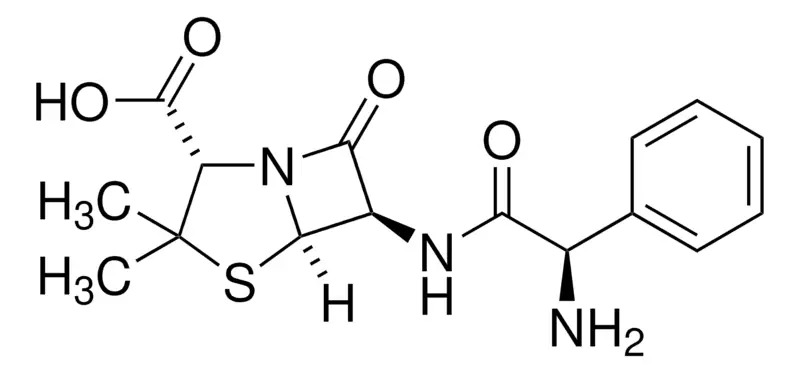
Ampicillin sodium salt, also known by synonyms such as D(-)-α-Aminobenzylpenicillin Sodium Salt or Ampicillin Na, is a widely used antibiotic that inhibits bacterial cell wall synthesis. This compound is commonly used in microbiology, cell culture, and molecular biology applications to prevent contamination and study antibiotic resistance mechanisms.
Key Properties:
- Synonyms:
- D(-)-α-Aminobenzylpenicillin Sodium Salt
- Ampicillin Na
- D-(−)-α-Aminobenzylpenicillin Sodium Salt
- Chemical Formula:
C₁₆H₁₈N₃NaO₄S - Molecular Weight:
371.39 g/mol - Melting Point:
215°C (decomposes) - Storage Temperature:
Store in a refrigerator for optimal stability. - Identifiers:
- MDL Number: MFCD00064313
- CAS Number: 69-52-3
- EINECS Number: 200-708-1
Specifications:
- Quality: Cell culture tested to ensure suitability for microbiological and research applications.
- Appearance: Typically available as a white to off-white powder.
- Solubility: Soluble in water, making it easy to prepare for cell culture media and microbiological assays.
- Stability: Maintains activity and integrity when stored under recommended conditions.
Mechanism of Action:
Ampicillin sodium salt works by inhibiting bacterial cell wall synthesis. It binds to penicillin-binding proteins (PBPs) inside the bacterial cell wall, disrupting the cross-linking of peptidoglycan chains, which are crucial for maintaining bacterial cell wall integrity. This ultimately leads to bacterial lysis and death, making it effective against a broad range of gram-positive and gram-negative bacteria.
Applications:
- Microbiology:
- Used as an antibiotic to study bacterial growth and susceptibility.
- Incorporated into culture media to select for antibiotic-resistant bacterial strains.
- Molecular Biology:
- Used in the selection of plasmid-containing bacterial cells during genetic cloning experiments.
- Effective in experiments involving Ampicillin resistance genes in plasmids.
- Cell Culture:
- Prevents bacterial contamination in mammalian and microbial cell culture systems.
- Useful in experiments requiring sterile conditions for extended periods.
- Pharmaceutical Research:
- Studied as a model compound for β-lactam antibiotic mechanisms.
- Used in antibiotic resistance research and drug development.
Advantages:
- Broad Spectrum: Effective against both gram-positive and some gram-negative bacteria.
- Reliable Quality: Cell culture tested for purity and efficacy.
- Water Solubility: Easy to prepare and incorporate into media or experimental protocols.
Packaging Information:
- Pack Sizes:
- 25 g (Catalog No.: BIA0104-25G)
- 100 g (Catalog No.: BIA0104-100G)
- 250 g (Catalog No.: BIA0104-250G)
- Packaging Type: Supplied in bottles to ensure safe handling and storage.
Storage and Handling:
- Storage:
- Store at refrigerator temperatures to maintain stability and effectiveness.
- Avoid exposure to moisture or heat to prevent degradation.
- Handling Precautions:
- Use personal protective equipment (PPE) during handling to avoid contact with skin or inhalation.
- Dispose of in accordance with local regulations.
Apollo Scientific Ampicillin Sodium Salt is a versatile and reliable antibiotic for research and industrial applications. Its broad-spectrum antibacterial activity, high solubility, and suitability for cell culture make it an indispensable tool in microbiology, molecular biology, and pharmaceutical research.
No resources are currently available for this product.
Ampicillin sodium salt, also known by synonyms such as D(-)-α-Aminobenzylpenicillin Sodium Salt or Ampicillin Na, is a widely used antibiotic that inhibits bacterial cell wall synthesis. This compound is commonly used in microbiology, cell culture, and molecular biology applications to prevent contamination and study antibiotic resistance mechanisms.
Key Properties:
- Synonyms:
- D(-)-α-Aminobenzylpenicillin Sodium Salt
- Ampicillin Na
- D-(−)-α-Aminobenzylpenicillin Sodium Salt
- Chemical Formula:
C₁₆H₁₈N₃NaO₄S - Molecular Weight:
371.39 g/mol - Melting Point:
215°C (decomposes) - Storage Temperature:
Store in a refrigerator for optimal stability. - Identifiers:
- MDL Number: MFCD00064313
- CAS Number: 69-52-3
- EINECS Number: 200-708-1
Specifications:
- Quality: Cell culture tested to ensure suitability for microbiological and research applications.
- Appearance: Typically available as a white to off-white powder.
- Solubility: Soluble in water, making it easy to prepare for cell culture media and microbiological assays.
- Stability: Maintains activity and integrity when stored under recommended conditions.
Mechanism of Action:
Ampicillin sodium salt works by inhibiting bacterial cell wall synthesis. It binds to penicillin-binding proteins (PBPs) inside the bacterial cell wall, disrupting the cross-linking of peptidoglycan chains, which are crucial for maintaining bacterial cell wall integrity. This ultimately leads to bacterial lysis and death, making it effective against a broad range of gram-positive and gram-negative bacteria.
Applications:
- Microbiology:
- Used as an antibiotic to study bacterial growth and susceptibility.
- Incorporated into culture media to select for antibiotic-resistant bacterial strains.
- Molecular Biology:
- Used in the selection of plasmid-containing bacterial cells during genetic cloning experiments.
- Effective in experiments involving Ampicillin resistance genes in plasmids.
- Cell Culture:
- Prevents bacterial contamination in mammalian and microbial cell culture systems.
- Useful in experiments requiring sterile conditions for extended periods.
- Pharmaceutical Research:
- Studied as a model compound for β-lactam antibiotic mechanisms.
- Used in antibiotic resistance research and drug development.
Advantages:
- Broad Spectrum: Effective against both gram-positive and some gram-negative bacteria.
- Reliable Quality: Cell culture tested for purity and efficacy.
- Water Solubility: Easy to prepare and incorporate into media or experimental protocols.
Packaging Information:
- Pack Sizes:
- 25 g (Catalog No.: BIA0104-25G)
- 100 g (Catalog No.: BIA0104-100G)
- 250 g (Catalog No.: BIA0104-250G)
- Packaging Type: Supplied in bottles to ensure safe handling and storage.
Storage and Handling:
- Storage:
- Store at refrigerator temperatures to maintain stability and effectiveness.
- Avoid exposure to moisture or heat to prevent degradation.
- Handling Precautions:
- Use personal protective equipment (PPE) during handling to avoid contact with skin or inhalation.
- Dispose of in accordance with local regulations.
Apollo Scientific Ampicillin Sodium Salt is a versatile and reliable antibiotic for research and industrial applications. Its broad-spectrum antibacterial activity, high solubility, and suitability for cell culture make it an indispensable tool in microbiology, molecular biology, and pharmaceutical research.
No resources are currently available for this product.
Specifications
| Pack Size | 250g, 100g, 25g |