



 0
0
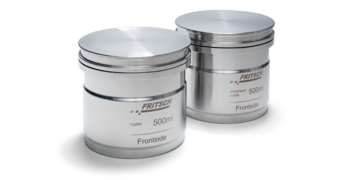
FRITSCH PULVERISETTE™ 5 Premium Grinding Bowl with Lid & Seal ring
Catalog No :
CAS Number :
Brand :
In Stock
Specifications:
| Application | Milling & Particle Sizing |
| Storage Temperature | Ambient |
| Product Type | Planetary Ball Mills |
| Product Brand | FRITSCH GmbH |
| Product Grade | Analytical grade |
The FRITSCH PULVERISETTE™ 5 Grinding Bowls are precision-engineered accessories designed to deliver optimal grinding performance, reproducibility, and contamination control in planetary ball milling applications. Available in multiple volumes and materials, these grinding bowls allow precise matching of sample size, material properties, and grinding requirements.
For operation of the PULVERISETTE™ 5 premium line, a minimum of two grinding bowls and the corresponding number of grinding balls are required. For best results, the bowl and ball material should be harder than the sample, and typically of the same material to prevent contamination.
All premium line grinding bowls feature a stainless steel casing, consistent inner diameter, and clear identification labeling, ensuring durability and ease of handling.
Key Selection Considerations
- Select at least 2 grinding bowls per operation
- Choose material hardness > sample hardness
- Match bowl and ball material to avoid contamination
- Use higher density materials (e.g., tungsten carbide) for faster grinding
- Consider useful capacity (not total volume) for optimal performance
Grinding Bowl Variants
420 – 500 ml Volume Range
| Material | Order No. | Bowl Volume | Useful Capacity |
|---|---|---|---|
| Agate (SiO₂) | 50.6400.00 | 420 ml | 60 – 200 ml |
| Zirconium Oxide (ZrO₂) | 50.6490.00 | 500 ml | 80 – 225 ml |
| Hardened Stainless Steel (Fe-Cr) | 50.6550.00 | 500 ml | 80 – 225 ml |
| Tungsten Carbide (WC) | 50.6580.00 | 500 ml | 80 – 225 ml |
| Silicon Nitride (Si₃N₄) | 50.6480.00 | 500 ml | 80 – 225 ml |
250 ml Volume Range
| Material | Order No. | Bowl Volume | Useful Capacity |
|---|---|---|---|
| Agate (SiO₂) | 50.6610.00 | 250 ml | 30 – 125 ml |
| Zirconium Oxide (ZrO₂) | 50.6700.00 | 250 ml | 30 – 125 ml |
| Hardened Stainless Steel (Fe-Cr) | 50.6760.00 | 250 ml | 30 – 125 ml |
| Tungsten Carbide (WC) | 50.6790.00 | 250 ml | 30 – 125 ml |
| Silicon Nitride (Si₃N₄) | 50.6450.00 | 250 ml | 30 – 125 ml |
125 – 150 ml Volume Range
| Material | Order No. | Bowl Volume | Useful Capacity |
|---|---|---|---|
| Agate (SiO₂) | 50.6840.00 | 125 ml | 15 – 50 ml |
| Zirconium Oxide (ZrO₂) | 50.6900.00 | 150 ml | 20 – 70 ml |
| Hardened Stainless Steel (Fe-Cr) | 50.6920.00 | 150 ml | 20 – 70 ml |
| Tungsten Carbide (WC) | 50.6940.00 | 150 ml | 20 – 70 ml |
Applications
- High-energy grinding and nano-scale particle size reduction
- Mechanical alloying and material activation
- Sample homogenisation and mixing
- Preparation of hard, brittle, soft, and moist materials
- Contamination-sensitive applications (material-specific bowls)
Grinding Bowl Selection Guide
Selecting the appropriate grinding bowl is essential for achieving optimal grinding efficiency, contamination control, and reproducible analytical results. This guide supports users in choosing the right material and volume based on application requirements and sample characteristics.
1. Material Selection Guide (Critical Decision Factor)
| Material | Hardness / Density | Best For | Key Advantages |
|---|---|---|---|
| Agate (SiO₂) | Medium / Low | Soft to medium-hard samples, contamination-sensitive applications | Chemically inert, ultra-low contamination, ideal for high-purity work |
| Zirconium Oxide (ZrO₂) | High / Medium | Ceramics, minerals, pharmaceuticals, general laboratory use | Excellent wear resistance, low contamination, highly versatile |
| Hardened Stainless Steel (Fe-Cr) | High / High | Metals, alloys, minerals | High durability, cost-effective, efficient grinding performance |
| Tungsten Carbide (WC) | Very High / Very High | Hard, abrasive materials (e.g., ores, carbides) | Maximum grinding efficiency, very high impact energy, rapid size reduction |
| Silicon Nitride (Si₃N₄) | Very High / Medium | High-purity applications, advanced materials | Superior wear resistance, excellent purity, ideal for advanced research |
2. Material Selection by Sample Type
| Sample Type | Recommended Material |
|---|---|
| Soft / organic materials | Agate |
| Pharmaceuticals / contamination-sensitive | Agate or Zirconia |
| General laboratory samples | Zirconium Oxide |
| Metals and alloys | Stainless Steel |
| Hard minerals / ores | Tungsten Carbide |
| Advanced ceramics / high-purity materials | Silicon Nitride |
3. Volume Selection Guide
Important: Useful capacity is typically 30–50% of total bowl volume
| Bowl Volume | Useful Capacity | Recommended Use |
|---|---|---|
| 125 ml | 15 – 50 ml | Small sample sizes, high-value materials |
| 150 ml | 20 – 70 ml | Routine laboratory samples |
| 250 ml | 30 – 125 ml | Medium batch processing |
| 420 ml | 60 – 200 ml | Larger samples, pilot applications |
| 500 ml | 80 – 225 ml | High-volume grinding |
4. Performance Optimization Guidelines
For Faster Grinding
- Use higher density materials (e.g., Tungsten Carbide, Stainless Steel)
- Optimize rotational speed and milling parameters
- Use appropriate grinding ball size distribution
For High-Purity Results
- Use Agate, Zirconia, or Silicon Nitride
- Match grinding bowl and ball material
- Maintain clean operating conditions
For Hard Materials
- Use Tungsten Carbide or Stainless Steel
- Apply appropriate grinding ball combinations for efficient comminution
5. Matching Grinding Balls (Essential Rule)
- Use grinding balls of the same material as the bowl
- Apply a combination of ball sizes for optimal impact and friction
- Ensure appropriate filling ratio for efficient grinding
6. Key Selection Rules (Quick Reference)
- Select a bowl material harder than the sample
- Use at least 2 grinding bowls per operation
- Base selection on useful capacity, not total volume
- Higher density materials provide enhanced grinding efficiency
- Choose material based on purity and application requirements
7. Typical Use Cases
| Application | Recommended Setup |
|---|---|
| Nanotechnology research | Zirconia or Silicon Nitride, small volume |
| Mechanical alloying | Stainless Steel or Tungsten Carbide |
| Geological samples | Tungsten Carbide, large volume |
| Pharmaceuticals | Agate or Zirconia |
| Routine QC laboratories | Zirconia (balanced performance) |
The correct selection of grinding bowls for the FRITSCH PULVERISETTE™ 5 ensures maximum efficiency, precision, and reproducibility in laboratory milling processes. By aligning material properties and volume selection with application needs, users can achieve optimized grinding performance and consistent analytical outcomes.
For most laboratory applications, Zirconium Oxide provides a balanced and versatile solution, while Tungsten Carbide delivers maximum grinding performance, and Agate remains ideal for high-purity and contamination-sensitive workflows.
- Bowl Material & Volume: Agate (SiO₂), 420 mL, 60–200 mL Zirconium Oxide (ZrO₂), 500 mL, 80–225 mL Hardened Stainless Steel (Fe-Cr), 500 mL, 80–225 mL Tungsten Carbide (WC), 500 mL, 80–225 mL Silicon Nitride (Si₃N₄), 500 mL, 80–225 mL Agate (SiO₂), 250 mL, 30–125 mL Zirconium Oxide (ZrO₂), 250 mL, 30–125 mL Hardened Stainless Steel (Fe-Cr), 250 mL, 30–125 mL Tungsten Carbide (WC), 250 mL, 30–125 mL Silicon Nitride (Si₃N₄), 250 mL, 30–125 mL Agate (SiO₂), 125 mL, 15–50 mL Zirconium Oxide (ZrO₂), 150 mL, 20–70 mL Hardened Stainless Steel (Fe-Cr), 150 mL, 20–70 mL Tungsten Carbide (WC), 150 mL, 20–70 mL