



 0
0
Specifications:
| Application | Analytical Chemistry | ||
| Storage Temperature | -20°C | ||
| Product Type | Standards | Forms | Solid |
| Product Brand | MedChem Express | ||
| Product Grade | Analytical grade | Formula | C₃₉H₇₆O₅ |
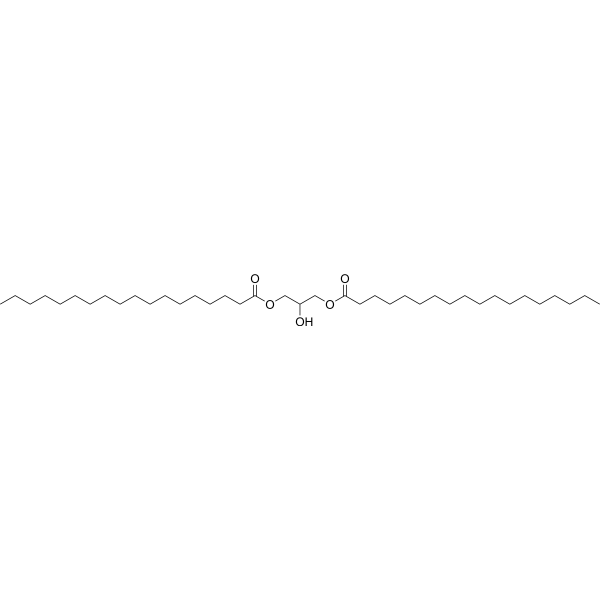
1,3-Distearin, also known as 1,3-Distearoyl glycerol, is a diacylglycerol (DAG) lipid composed of two stearic acid (C18:0) chains esterified at the sn-1 and sn-3 positions of the glycerol backbone, with a free hydroxyl group at the sn-2 position.
This compound is a valuable synthetic intermediate widely used in medicinal chemistry and pharmaceutical research, particularly in the synthesis of non-steroidal anti-inflammatory drugs (NSAIDs). In addition, 1,3-Distearin is relevant in lipid chemistry and metabolic research, where defined diacylglycerols are used to study lipid structure, reactivity, and biological function.
Intended Use
- For research use only (RUO)
- Not for human or veterinary use
-
Intended for:
- Pharmaceutical and medicinal chemistry research
- Synthesis of NSAID intermediates
- Lipid chemistry and diacylglycerol studies
- Organic synthesis and method development
Chemical & Physical Properties
| Property | Specification |
|---|---|
| Chemical Name | 1,3-Distearin |
| Synonym | 1,3-Distearoyl glycerol |
| CAS Number | 504-40-5 |
| Molecular Formula | C₃₉H₇₆O₅ |
| Molecular Weight | 625.02 g/mol |
| Purity | ≥98.0% |
| Appearance | Solid |
| Color | White to off-white |
| Chemical Class | Diacylglycerol (DAG) |
Chemical Structure Information
-
SMILES:
CCCCCCCCCCCCCCCCCC(OCC(O)COC(CCCCCCCCCCCCCCCCC)=O)=O
The structure features two long-chain saturated fatty acids and a free secondary hydroxyl group, making it chemically reactive and suitable for downstream functionalization.
Functional & Research Significance
Pharmaceutical & Medicinal Chemistry
1,3-Distearin is commonly used as an intermediate in the synthesis of NSAIDs, including:
- Ibuprofen
- Naproxen
- Diclofenac
- Related non-steroidal anti-inflammatory agents
Its defined structure enables controlled esterification, substitution, and derivatization in synthetic pathways.
Lipid Chemistry
-
Serves as a model diacylglycerol for studying:
- Lipid reactivity
- Structure–function relationships
- DAG metabolism and signaling
-
Useful in comparative studies with:
- 1,2-Distearoyl-sn-glycerol
- Triacylglycerols (TAGs)
- Phospholipid precursors
Applications
- NSAID synthesis and drug development research
- Organic synthesis intermediate
- Diacylglycerol and lipid chemistry studies
- Medicinal chemistry method development
- Lipid metabolism and signaling research
Packaging & Available Sizes
| Size | Product Code |
|---|---|
| 5 mg | HY-W702781-5MG |
| 10 mg | HY-W702781-10MG |
| 50 mg | HY-W702781-50MG |
| 100 mg | HY-W702781-100MG |
Storage & Stability
| Form | Storage Condition | Stability |
|---|---|---|
| Powder | –20 °C | Up to 3 years |
| Powder | 4 °C | Up to 2 years |
| In solvent | –80 °C | Up to 6 months |
| In solvent | –20 °C | Up to 1 month |
Key Advantages
- High purity (≥98.0%)
- Well-defined diacylglycerol structure
- Ideal synthetic intermediate for NSAIDs
- Suitable for advanced medicinal chemistry research
- Available in multiple small-quantity pack sizes
Comparison Note
- 1,3-Distearin (this product): Free sn-2 hydroxyl, high synthetic versatility
- 1,2-Distearoyl-sn-glycerol: Fully esterified sn-1/sn-2 DAG, commonly used as lipidomics standard
- Triacylglycerols: No free hydroxyl, lower synthetic flexibility
1,3-Distearin (1,3-Distearoyl glycerol) is a high-purity research compound with significant value in pharmaceutical synthesis, medicinal chemistry, and lipid research. Its dual role as a synthetic intermediate for NSAIDs and a model diacylglycerol makes it an essential reagent for laboratories working in drug development and lipid chemistry.
- Pack Size: 10mg 5mg 50 mg 100 mg