










 Contact us
  My Experiments
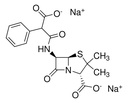

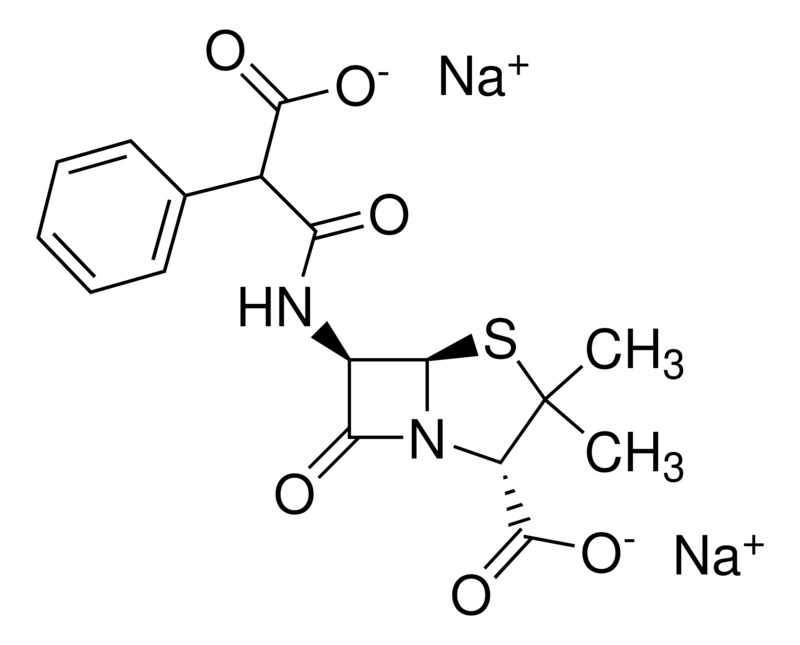
Gibco™ Carbenicillin Disodium Salt is a semi-synthetic penicillin antibiotic containing a carboxyl and benzyl group, with a mechanism of action similar to ampicillin. It inhibits bacterial cell wall synthesis, displaying selective activity against Gram-negative bacteria, while demonstrating low toxicity to plant tissues.
Compared to ampicillin, carbenicillin is more resistant to β-lactamase degradation, offering improved stability in culture systems. It is widely used in plant transformation workflows, particularly for the elimination of Agrobacterium tumefaciens following co-cultivation, and in E. coli selection assays. Carbenicillin is supplied as a sterile powder, ready to be reconstituted into stock solutions of 50–100 mg/mL in water.
Key Features
- Semi-synthetic penicillin – stable analog of ampicillin with improved β-lactamase resistance.
- Selective activity – effective against Gram-negative bacteria such as Agrobacterium and E. coli.
- Low phytotoxicity – suitable for plant tissue culture applications.
- Enhanced stability – reduces the formation of satellite colonies in long-term incubations.
- Flexible preparation – supplied as a powder; recommended stock 50–100 mg/mL.
Applications
- Plant biotechnology – elimination of Agrobacterium tumefaciens in transformation workflows.
- Bacterial selection – maintenance of plasmid vectors in E. coli cultures.
- Microbial genetics – selection for ampicillin/carbenicillin resistance markers.
- Molecular cloning – prevention of satellite colony formation in long incubations.
Technical Specifications
| Property | Value |
|---|---|
| Product Type | Antibiotic |
| Antibiotic Class | Semi-synthetic penicillin |
| Mechanism of Action | Inhibits bacterial cell wall synthesis |
| Form | Powder |
| Color | White to off-white |
| Concentration Range | 50–100 µg/mL (working) |
| Stock Solution | 50–100 mg/mL in water |
| Resistance Marker | β-lactamase (bla gene, confers ampicillin/carbenicillin resistance) |
| Shelf Life | 36 months |
| Sterility | Sterile |
| Storage Conditions | 2–8 °C |
| Shipping Conditions | Wet ice |
| CAS Number | – (penicillin derivative) |
| Product Line | Gibco™ |
Available Format
| Catalog Number | Quantity | Format |
|---|---|---|
| 10177012 | 5 g | Powder |
Gibco™ Carbenicillin Disodium Salt provides a stable, selective, and low-toxicity antibiotic solution for plant transformation and bacterial selection. Its enhanced resistance to β-lactamase degradation ensures reproducibility and reduces satellite colony formation, making it an essential antibiotic for molecular cloning and plant biotechnology research.
Selection Reagents Brochure
Gibco™ Carbenicillin Disodium Salt is a semi-synthetic penicillin antibiotic containing a carboxyl and benzyl group, with a mechanism of action similar to ampicillin. It inhibits bacterial cell wall synthesis, displaying selective activity against Gram-negative bacteria, while demonstrating low toxicity to plant tissues.
Compared to ampicillin, carbenicillin is more resistant to β-lactamase degradation, offering improved stability in culture systems. It is widely used in plant transformation workflows, particularly for the elimination of Agrobacterium tumefaciens following co-cultivation, and in E. coli selection assays. Carbenicillin is supplied as a sterile powder, ready to be reconstituted into stock solutions of 50–100 mg/mL in water.
Key Features
- Semi-synthetic penicillin – stable analog of ampicillin with improved β-lactamase resistance.
- Selective activity – effective against Gram-negative bacteria such as Agrobacterium and E. coli.
- Low phytotoxicity – suitable for plant tissue culture applications.
- Enhanced stability – reduces the formation of satellite colonies in long-term incubations.
- Flexible preparation – supplied as a powder; recommended stock 50–100 mg/mL.
Applications
- Plant biotechnology – elimination of Agrobacterium tumefaciens in transformation workflows.
- Bacterial selection – maintenance of plasmid vectors in E. coli cultures.
- Microbial genetics – selection for ampicillin/carbenicillin resistance markers.
- Molecular cloning – prevention of satellite colony formation in long incubations.
Technical Specifications
| Property | Value |
|---|---|
| Product Type | Antibiotic |
| Antibiotic Class | Semi-synthetic penicillin |
| Mechanism of Action | Inhibits bacterial cell wall synthesis |
| Form | Powder |
| Color | White to off-white |
| Concentration Range | 50–100 µg/mL (working) |
| Stock Solution | 50–100 mg/mL in water |
| Resistance Marker | β-lactamase (bla gene, confers ampicillin/carbenicillin resistance) |
| Shelf Life | 36 months |
| Sterility | Sterile |
| Storage Conditions | 2–8 °C |
| Shipping Conditions | Wet ice |
| CAS Number | – (penicillin derivative) |
| Product Line | Gibco™ |
Available Format
| Catalog Number | Quantity | Format |
|---|---|---|
| 10177012 | 5 g | Powder |
Gibco™ Carbenicillin Disodium Salt provides a stable, selective, and low-toxicity antibiotic solution for plant transformation and bacterial selection. Its enhanced resistance to β-lactamase degradation ensures reproducibility and reduces satellite colony formation, making it an essential antibiotic for molecular cloning and plant biotechnology research.