










 Contact us
  My Experiments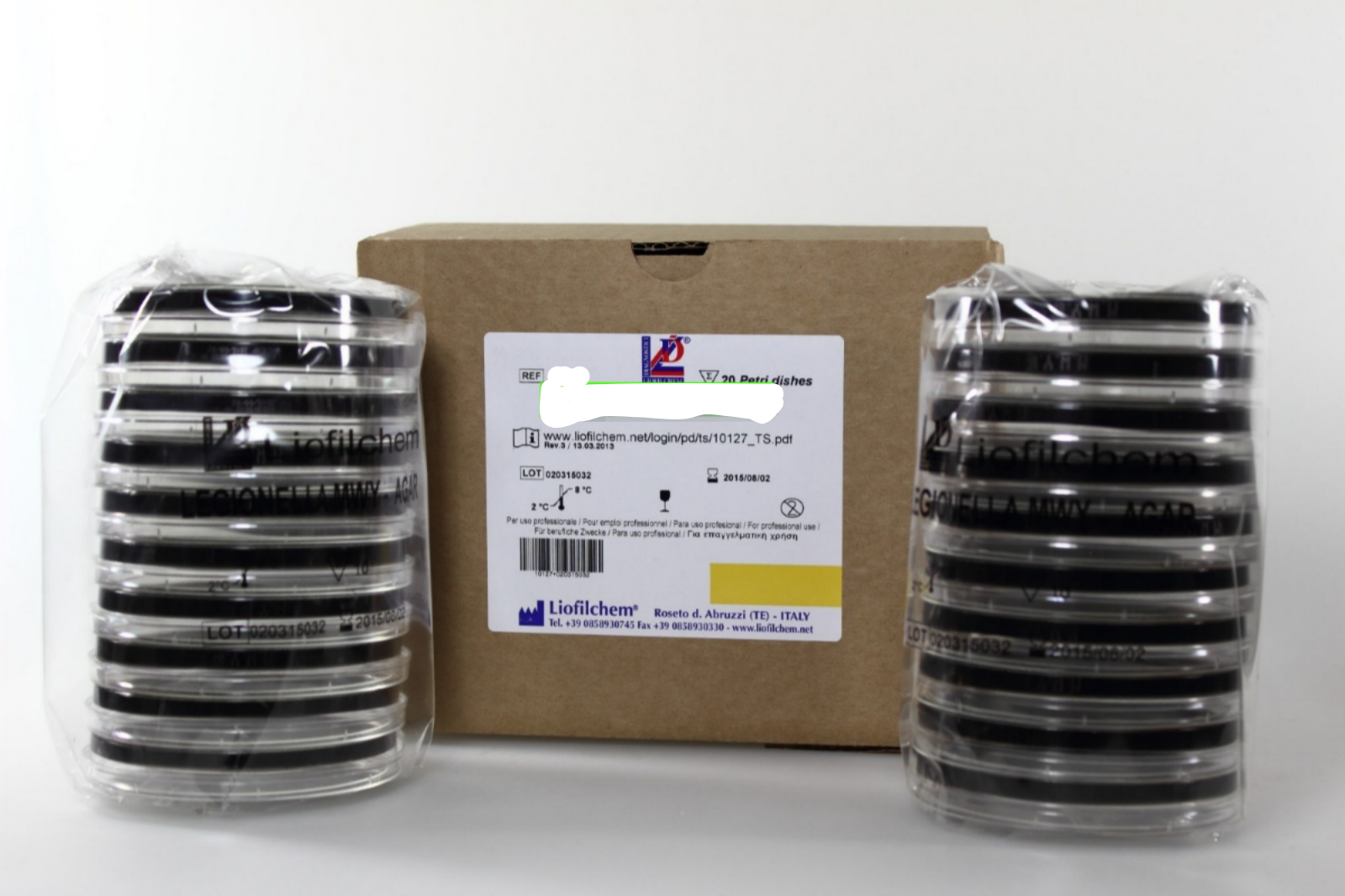
Selective and Differential Medium for Isolation and Identification of Enterobacteriaceae and Other Gram-Negative Bacteria
Liofilchem® MacConkey Agar is a selective and differential culture medium formulated for the isolation and differentiation of Gram-negative enteric bacilli, particularly from clinical specimens, pharmaceuticals, food, water, and materials of sanitary interest. It is especially suited for the identification of lactose-fermenting and non-lactose-fermenting bacteria in compliance with the harmonized methods of the USP, EP, and JP.
Intended Use
- Selectively isolates Gram-negative bacilli from mixed microbial populations.
- Differentiates lactose fermenters (e.g., E. coli, Klebsiella spp.) from non-lactose fermenters (e.g., Salmonella, Shigella, Proteus spp.).
- Widely used in clinical diagnostics, pharmaceutical quality control, and environmental microbiology.
Typical Composition (per Liter)
| Component | Concentration (g/L) |
|---|---|
| Pancreatic Digest of Gelatin | 17.0 |
| Peptone from Meat | 1.5 |
| Peptone from Casein | 1.5 |
| Lactose | 10.0 |
| Sodium Chloride | 5.0 |
| Bile Salts | 1.5 |
| Agar | 15.0* |
| Neutral Red (pH Indicator) | 0.03 |
| Crystal Violet (selective agent) | 0.001 |
| Final pH at 25°C | 7.1 ± 0.2 |
*Agar concentration adjusted for optimal gel strength.
Method Principle
- Peptones and digests supply nitrogen, amino acids, and vitamins.
- Lactose is the fermentable sugar used for differentiating enteric bacteria.
- Bile salts and crystal violet selectively inhibit Gram-positive organisms.
-
Neutral red serves as a pH indicator:
- Lactose fermenters → pink to red colonies
- Non-lactose fermenters → colorless colonies
Expected Cultural Characteristics
| Organism (ATCC®) | Colony Appearance |
|---|---|
| Escherichia coli 8739 | Pink colonies with bile precipitate halo |
| Klebsiella pneumoniae 13883 | Pink colonies |
| Salmonella Typhimurium 14028 | Colorless colonies |
| Shigella flexneri 12022 | Colorless colonies |
| Proteus mirabilis 12453 | Colorless colonies |
| Enterococcus faecalis 29212 | Small, opaque colonies or inhibited |
| Staphylococcus aureus 25923 | Inhibited |
Applications
- Detection of E. coli in non-sterile pharmaceutical products per USP/EP/JP harmonized methods
- Differentiation of enteric bacilli in clinical stool or urine samples
- Testing of food, wastewater, or environmental swabs
- Used as a subculture medium following enrichment in Tryptic Soy Broth and MacConkey Broth
Test Procedure
- Inoculate the specimen by streaking directly or from enrichment onto the agar surface.
- Incubate at 35 ± 2°C for 18–24 hours in aerobic conditions.
-
For harmonized pharmacopeial testing:
- Pre-enrich sample in TSB, then MacConkey Broth, followed by plating on MacConkey Agar.
Available Product Formats
| Product | Packaging | Ref. Code |
|---|---|---|
| MacConkey Agar, 90 mm plates | 20 plates | 10029 |
| MacConkey Agar, 90 mm plates | 100 plates | 10029* |
| Bottles (100 mL) | 6 bottles | 402240 |
| Bottles (200 mL) | 6 bottles | 412240 |
| Bottles (500 mL) | 6 bottles | 470090 |
| Dehydrated medium (100 g) | 1 container | 620028 |
| Dehydrated medium (500 g) | 1 container | 610028 |
| Dehydrated medium (5 kg) | 1 container | 6100285 |
Storage and Shelf Life
| Form | Storage | Shelf Life |
|---|---|---|
| Dehydrated Powder | 10–30°C (dry, sealed) | 4 years |
| Ready-to-use Bottles | 10–25°C, away from light | 2 years |
| Ready-to-use Plates | 10–25°C, away from light | 6 months |
Liofilchem® MacConkey Agar is a reliable and compliant medium for detecting Enterobacteriaceae and other Gram-negative organisms, providing clear colony differentiation based on lactose fermentation. Available in plates, bottles, and dehydrated formats, it is ideal for use in clinical, pharmaceutical, and environmental microbiology laboratories.
IFU
Selective and Differential Medium for Isolation and Identification of Enterobacteriaceae and Other Gram-Negative Bacteria
Liofilchem® MacConkey Agar is a selective and differential culture medium formulated for the isolation and differentiation of Gram-negative enteric bacilli, particularly from clinical specimens, pharmaceuticals, food, water, and materials of sanitary interest. It is especially suited for the identification of lactose-fermenting and non-lactose-fermenting bacteria in compliance with the harmonized methods of the USP, EP, and JP.
Intended Use
- Selectively isolates Gram-negative bacilli from mixed microbial populations.
- Differentiates lactose fermenters (e.g., E. coli, Klebsiella spp.) from non-lactose fermenters (e.g., Salmonella, Shigella, Proteus spp.).
- Widely used in clinical diagnostics, pharmaceutical quality control, and environmental microbiology.
Typical Composition (per Liter)
| Component | Concentration (g/L) |
|---|---|
| Pancreatic Digest of Gelatin | 17.0 |
| Peptone from Meat | 1.5 |
| Peptone from Casein | 1.5 |
| Lactose | 10.0 |
| Sodium Chloride | 5.0 |
| Bile Salts | 1.5 |
| Agar | 15.0* |
| Neutral Red (pH Indicator) | 0.03 |
| Crystal Violet (selective agent) | 0.001 |
| Final pH at 25°C | 7.1 ± 0.2 |
*Agar concentration adjusted for optimal gel strength.
Method Principle
- Peptones and digests supply nitrogen, amino acids, and vitamins.
- Lactose is the fermentable sugar used for differentiating enteric bacteria.
- Bile salts and crystal violet selectively inhibit Gram-positive organisms.
-
Neutral red serves as a pH indicator:
- Lactose fermenters → pink to red colonies
- Non-lactose fermenters → colorless colonies
Expected Cultural Characteristics
| Organism (ATCC®) | Colony Appearance |
|---|---|
| Escherichia coli 8739 | Pink colonies with bile precipitate halo |
| Klebsiella pneumoniae 13883 | Pink colonies |
| Salmonella Typhimurium 14028 | Colorless colonies |
| Shigella flexneri 12022 | Colorless colonies |
| Proteus mirabilis 12453 | Colorless colonies |
| Enterococcus faecalis 29212 | Small, opaque colonies or inhibited |
| Staphylococcus aureus 25923 | Inhibited |
Applications
- Detection of E. coli in non-sterile pharmaceutical products per USP/EP/JP harmonized methods
- Differentiation of enteric bacilli in clinical stool or urine samples
- Testing of food, wastewater, or environmental swabs
- Used as a subculture medium following enrichment in Tryptic Soy Broth and MacConkey Broth
Test Procedure
- Inoculate the specimen by streaking directly or from enrichment onto the agar surface.
- Incubate at 35 ± 2°C for 18–24 hours in aerobic conditions.
-
For harmonized pharmacopeial testing:
- Pre-enrich sample in TSB, then MacConkey Broth, followed by plating on MacConkey Agar.
Available Product Formats
| Product | Packaging | Ref. Code |
|---|---|---|
| MacConkey Agar, 90 mm plates | 20 plates | 10029 |
| MacConkey Agar, 90 mm plates | 100 plates | 10029* |
| Bottles (100 mL) | 6 bottles | 402240 |
| Bottles (200 mL) | 6 bottles | 412240 |
| Bottles (500 mL) | 6 bottles | 470090 |
| Dehydrated medium (100 g) | 1 container | 620028 |
| Dehydrated medium (500 g) | 1 container | 610028 |
| Dehydrated medium (5 kg) | 1 container | 6100285 |
Storage and Shelf Life
| Form | Storage | Shelf Life |
|---|---|---|
| Dehydrated Powder | 10–30°C (dry, sealed) | 4 years |
| Ready-to-use Bottles | 10–25°C, away from light | 2 years |
| Ready-to-use Plates | 10–25°C, away from light | 6 months |
Liofilchem® MacConkey Agar is a reliable and compliant medium for detecting Enterobacteriaceae and other Gram-negative organisms, providing clear colony differentiation based on lactose fermentation. Available in plates, bottles, and dehydrated formats, it is ideal for use in clinical, pharmaceutical, and environmental microbiology laboratories.
IFU
Spezifikationen
| Pack Size | 20/Box, 100/Box |